Hello everyone and welcome to our 2026 Summer Newsletter. I hope everyone has managed to keep well hydrated (maybe not as much as the World Cup Football teams) in this unusually warm summer.
A few highlights from this newsletter. The fabulous news about Procysbi means that patients in the whole of the UK will now have an option as to which cysteamine medicine best suits them.
Four of our trustees were privileged to attend the CNE International Conference in Dublin along with 38 adults and 18 children and young people from the UK. There we heard the latest information about the first child going through the stem cell transplant trial. The family have just shared their experience, living right on the cutting-edge of medical science.
We also have two stories that really bring home the impact of cystinosis on the wider family. One is very much up to date. Imagine having the news that both your grandchildren have been diagnosed with cystinosis – and one hasn’t yet been born. The second story is from the 1960s – 1980s, a reminder of what living at the ‘frontiers of medical knowledge’ meant back then, particularly for a sibling.
And, of course, a huge thanks to all of you who fundraise for the charity and help to keep our cystinosis community thriving.
We hope you enjoy the newsletter.
- Will Newman, Chair of the Trustees
Procysbi in England – at last!
Yes, Procysbi is now available for routine prescribing in England so we can finally say that Procysbi will be a choice for all patients in the UK. After 3 years of tortuous documentation and delays by the Clinical Priorities Advisory Group (CPAG) – which assesses medicines, medical devices and treatments according to their clinical effectiveness, benefit for patients and value for money – England finally comes into line with Scotland, Wales and Northern Ireland where Procysbi is already available.
We would like to acknowledge the input from the clinicians, led by David Game from Guy’s and St Thomas’s Hospital, who have worked hard on clinical sections of the policy and also the invaluable support from partners in Metabolic Support and Kidney Research UK. You can read the full update on our website here. Procysbi update
It is likely to be a number of weeks for the NHS system to update and before Procysbi can actually get into the hands of patients, but please do talk to your medical team.

CNE International Conference in Dublin July 2026

The CNE International Conference hosted in Dublin by Cystinosis Ireland was another opportunity to catch up with the latest on ongoing research, new ideas coming through, and what life is like for those with cystinosis in different countries. You will be able to read and follow this up when the presentations are uploaded by Cystinosis Network Europe and we are sharing some thoughts via Social Media. However, as important as these updates are, the main benefit of an in-person conference is simply being there. To be able to laugh and cry, to talk and hug with people who just ‘get it’ are probably the biggest takeaways from those few days together. And you can see it in the photos!

We asked our trustees for a single quote to sum up their experiences:

Oh, and of course, there was dancing

Stem Cell Gene Therapy
It was reported at the CNE Conference that the first child had gone through the stem cell transplant process in the USA and now you can read about the experience from the view of the parents as shared by Cystinosis Research Foundation. We can only say thank you for the bravery of this family, and those to come, who are right at the cutting edge of medical advances. The original Facebook post is here CRF Facebook Post.


Let’s hear it for Renal Nurses
Will Newman was at the National Home Haemodialysis Study Day in Manchester on Fri 17th July.

I was fortunate to be able to attend the Study Day along with our trusty CFUK stall and lots of opportunities to talk to renal nurses about cystinosis. I certainly know a lot more about Home Haemodialysis now, and hopefully, some of them know a bit more about what it is like to live with cystinosis.
Did you know, for example, that the UK has the largest cohort of HHD patients in the world – 140? However there is a big inequality of access round the country (postcode lottery) which is currently being addressed.I met a very lively renal nurse who looks after one of our cystinosis children in Newcastle and I had time to talk to my granddaughter’s nurse from Royal Manchester Children’s Hospital.
What blew me away in the afternoon were the case studies that some of the nurses shared and the lengths they were prepared to go to, to help parents and children have the opportunity for HHD. Usually parents are trained in the hospital but a nurse from Leeds described the months of home training she had undertaken with a mother with ADHD. She often had to sit outside the house in her car while the mother went through her own procedures of sterilising the already sterile packaging for HHD materials. All I can say is that, if these dedicated individuals are representative of all renal nurses, then we are really fortunate to have them in our cystinosis arena.
Sharing our story: life with cystinosis
Sarah, agreed to share her story with The South East Genomic Medicine Service who were looking for a patient representative in the renal space to interview as part of their Rare Chromo Day programme of events.
I was kindly asked to share my experience as a grandmother supporting grandchildren living with cystinosis. The aim was to help educate renal clinicians and other medical professionals about what life with this condition is really like.

Both of my grandchildren have been diagnosed with cystinosis. My grandson Leo also had another serious condition, which gave him only a 50% chance of survival; he needed surgery just one week after birth.
It was only by chance that we learned Leo had cystinosis. When my daughter Molly was eight months pregnant, a late amniocentesis revealed the condition. Because of this, we were advised to test Leo’s older sister Alba, who was then 20 months old. She already showed signs of unusual thirst, so we were almost certain — though we prayed we were wrong — that she too had cystinosis.
The following 11 months felt like a living nightmare. In many ways, it has been like a constant process of grieving — even though I know we are still very much at the start of this journey. I felt both nervous and eager to share my story and help raise awareness. Even though everything is still so new to us, I wanted to do right by the cystinosis community and represent our experience fairly.
I spoke with a lovely interviewer, and I hope I managed to get my points across even through the tears. Like with grieving, our family doesn’t often talk about our deepest feelings in detail — we hold back for fear of upsetting one another.
Above all, I wanted to explain just how isolating this journey can feel. I described it as driving down a very narrow, dark, winding country road. Cystinosis is still relatively unknown, even with the best efforts of medical professionals. It is not as well documented as more common conditions like cancer — which I compare to the M25, being a Londoner. There, funding is plentiful, the route is clearly signposted, you are warned of hazards ahead, SOS phones are placed regularly, and you get alerts for anything that might slow your journey. Because so many people travel that road, support and information are always there.
Cystinosis, by contrast, feels like a road hardly anyone uses. There are no streetlights, no way of knowing what lies around the next bend, no clear view of what is ahead. If we “break down,” there is no official help immediately at hand. We start with very little knowledge of this route, and the only real support we find comes from the other families travelling the same path. That, to me, is what makes it feel so isolating.
To any other grandparents reading this — and I am sure there are many — there is also the unique heartbreak of watching your own child watch their children suffer. It is a pain like no other, and I know it weighs just as heavily on you too.
For me, the interview felt like unravelling a huge, tightly knotted ball of wool inside my head — trying to untangle all those thoughts and feelings and condense them into something that made sense. By the end, I felt completely exhausted.
Our aim as a family, once the dust has settled a little more — and I truly hope it does — is to raise awareness and funds for the cystinosis charity. We are still in such early days, but our lives have changed forever. From now on, I will do whatever I can to support my family and help others on this same journey. I hope this is just the beginning.
Thanks, Sarah.
You can read Sarah’s interview here https://southeastgenomics.nhs.uk/patient-story/drowning-in-the-unknown-but-holding-on-for-the-small-wins/

The Child That Books Built:
a cystinosis sibling from the 1960s
Our chair, Will, discovers a surprise connection to cystinosis he never realised before.
You hardly expect to find the mention of cystinosis when reading through the literary reviews of the Sunday Times. This is what happened however in February this year when my wife suddenly said ‘Have you read this? It’s cystinosis!’ The review was for the publication of Francis Spufford’s new book, ‘Nonesuch’, a time-bending fantasy novel set in the Blitz. Hidden away in the review was a brief biographical snippet: ‘… his family life was “overshadowed” by the long illness of his younger sister, Bridget, who suffered from a rare genetic disease called cystinosis.’

Now, I am no stranger to Francis Spufford. In my previous incarnation as a librarian I regularly used to read excerpts from his book ‘The Child that Books Built’ (pub 2002) in which he not only revisited all the children’s books that had influenced him but explained how he withdrew into fiction, away from the difficulties of his family life. Those ‘difficulties’ turned out to be partly his mother’s early onset osteoporosis but mainly his younger sister, Bridget’s diagnosis of cystinosis in 1967. I must have read that at the time but, in 2002, the word cystinosis meant nothing to me.
The descriptions about Bridget and her treatment can be quite upsetting but make you hugely appreciative of the advances in treatment.
“There were only about twenty other living sufferers in Britain. It was a ridiculously rare disease, a disaster it was almost absurd to be afflicted by, like being struck by a meteorite. By the time that the Great Ormond Street Children’s Hospital in London made the connection between Bridget’s failure to thrive, and the condition called ‘cystinosis’ that appeared in the obscure footnotes of medical literature, she had one kidney already defunct, and the other about to give in. It was the autumn of 1967. Only a little time before, she’d have died right then. But the hospital had an experimental therapy that might offer her a few years of life. They offered a plan that would keep her on, but not over, the brink of starvation. My parents threw themselves into doing what was necessary. They crawled out of bed hourly during the night to adjust the tube that fed sugar-water, drop by individual drop, up Bridget’s nose, down her throat past her gag reflex, and straight into her stomach. They coaxed her into taking a daily fistful of pills. They did the four-hour return rail journey to London again and again. “
“The prediction had been that Bridget would die by the time she was eight or so, but by chance she had survived long enough for medicine to move on. They still couldn’t do anything about the cystinosis itself. Cystine crystals were still forming, an accident happening in every one of her cells. But transplant surgery had arrived, by 1975, pioneered as a solution to quite different diseases but perhaps adaptable to her problem. The doctors thought that a transplanted kidney could probably be protected by careful management from going the way of her own; maybe it would give her more life; maybe it could even give a semblance of an ordinary life. So in the year that she was eight and I was eleven, her medical notes, by now a mass of paper it took a trolley to move, were transferred to the kidney unit at Guy’s Hospital, and to save time looking for a compatible kidney my father donated her one of his.”
“Suddenly, for the first time, Bridget could walk distances, and eat normal food. The crated bottles of sugar-water faded out of her life, leaving nothing behind but a hatred for sweet things, and a counterbalancing taste for vicious little salad dressings, heavy on the pepper and the tabasco. Suddenly her life had no fixed expiration date any more.”
“Bridget died when she was twenty-two, of cystine deposits in her brain, an organ that can’t be transplanted. ‘I’m sick of living at the frontiers of medical knowledge,’ she said soon before the end. She lingered long enough for my father to read her the whole of The Lord of the Rings, aloud. “
Although we know that medical science and treatments have moved on, Francis’s descriptions looking back at his feelings as a young boy are still pertinent. It’s difficult to be honest and true to your feelings, especially as a sibling to someone who, because of their condition, is receiving a huge amount of attention. We need to try to understand how siblings are affected.
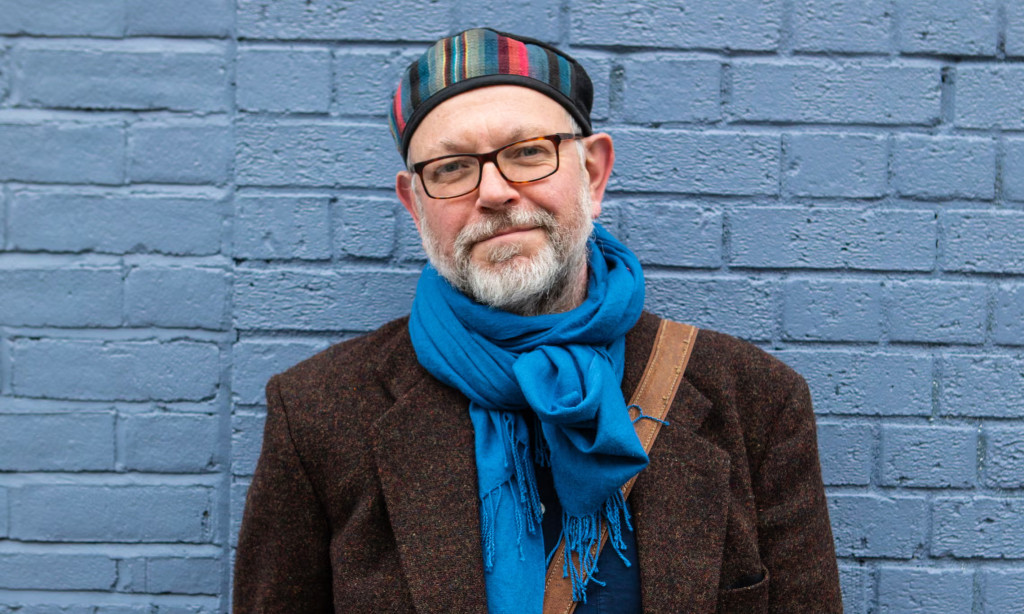
“What I knew was that Bridget’s fragility made the whole world fragile. Bridget sat on rugs at family picnics, looking as if a breath of wind would blow her away. Whatever my life had been like before Bridget was born, it was over: cause for a sibling envy so big I didn’t dare show it, or even feel it much, in case it cracked the thinned skeleton of what was left. It hurt to look at Bridget’s situation face on, and I shied away from it. “
“So when I read stories obsessively as a child I was striking a kind of deal that allowed me to turn away. Sometime in childhood I made a bargain that limited, so I thought, the power over me that real experience had, the real experience which comes to us in act and incident and through the proximate, continuous existence of those we love. All right, I said, I’ll let a quantity of that stream over me, if I can have a balancing portion of this, the other kind of experience, which is controlled, and repeatable, and comes off the page. I learned to pump up the artificial realities of fiction from page to mind at a pressure that equalised with the pressure of the world, so that (in theory) the moment I actually lived in could never fill me completely, whatever was happening.”
I contacted Francis when I found out about his connection with cystinosis and I received a courteous, but short, response that I fully understand: “Dear Will, I’m afraid that my sister’s experience in the 1960s and 1970s as one of the first generation of cystinotics not to just die in infancy would sound like something out of the dark ages to present-day families. Much more grim than inspiring. And I don’t think it’s somewhere I want to go back to myself very much. Sorry; I know this is not the answer you wanted. Francis”
Francis and Bridget’s mother, Margaret Spufford, also wrote about the family’s experiences, from the perspective of a parent, in her book ‘Celebration‘ published in 1989 (the year that Bridget died).
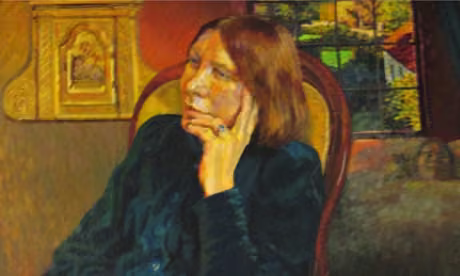

When Bridget’s kidney transplant failed in 1986 the specialists and family were uncertain whether to put her through another operation but: “…..there was a new drug, not yet through clinical trials, which for the first time tackled the root causes of the disease, rather than tinkering with the symptoms. It appeared to stop the deposit of cystine. The tune of the the renal specialists changed from ‘We won’t offer her another kidney’ to ‘We’ll just pop one in’.”
This new drug was Cystagon, not licensed in the UK until 1997, 8 years after Bridget died. It seems that we will always be just on the edge of medical advances but we should celebrate those who have gone before and worked so hard to make them a reality.
Lucy and Gio’s Fundraiser
Some fabulous running and riding fundraising for CFUK. Lucy and Tony Gambling completed a half marathon and their son Georgio completed an 11k bike ride. All together they raised £589 for the charity. Thank you so much from all of us at CFUK.

Charity Football Match

A charity football match has raised £1,483.50 for Cystinosis Foundation UK. On Sunday 24th May, a team of Chester FC supporters played fellow local team AFC Deeside in a match at Flint Town United that saw over 200 people turn out to watch. A raffle was also held, with dozens of prizes from local businesses helping to raise money. Organiser Chris Williams, whose eight-year-old son Freddie lives with cystinosis, was delighted with how much was raised. He said: “We know how much good every penny can do for the charity and the people it helps. So it was amazing to see so many people donate money and prizes and support what we were doing, as well as players from both teams take time out to play. We know the money will make a real difference.”


He shoots, he scores! Chris with one of his 2 goals in the game
Fundraising for the charity seems to run in the family as Chris’ nephew Sam Crompton also recently took part in a charity boxing match, raising over £500 for The Cystinosis Foundation UK and other charities.
Thank you so much from the CFUK team.